What makes one Oak Bay home feel timeless and another feel merely old? In a market where architecture is part of the daily streetscape, style can shape buyer interest, but it rarely works alone. If you are buying or selling in Oak Bay, it helps to understand how architectural character, lot setting, and renovation quality work together to influence value. Let’s dive in.
Oak Bay’s built character stands out
Oak Bay has a housing stock that is still strongly rooted in detached homes. In the 2021 Census, 63.0% of occupied private dwellings were single-detached houses, and 59.0% of occupied dwellings were built in 1960 or earlier.
That age profile helps explain why architecture matters so much here. Oak Bay’s Official Community Plan places clear value on protecting the district’s sense of place, including the retention of heritage and character houses, the conservation of streetscapes, and the protection of significant clusters of heritage buildings and landscapes.
Character homes define much of Oak Bay
When people think about Oak Bay architecture, they often picture early 20th-century character homes. The district’s heritage record repeatedly highlights Arts and Crafts or Craftsman and Tudor Revival homes as signature local forms, while also documenting Georgian, Queen Anne, Italianate, and Classical Revival examples.
That variety is part of Oak Bay’s appeal. Even when homes differ in style, many streets still feel cohesive because the houses share similar scale, setbacks, mature landscaping, and a strong relationship to the lot.
Why these homes draw attention
Many of Oak Bay’s heritage examples share physical features that buyers tend to notice right away. These include wood-frame construction, shingle or stucco cladding, half-timbering, front verandas, prominent gables, rear garage placement, stone walls, and mature gardens.
These details do more than create charm. They contribute to how a home sits within the streetscape, which can be just as important as the home’s interior finish.
Style alone does not determine value
In Oak Bay, a style label is only part of the story. A Craftsman or Tudor Revival home may attract strong interest, but value is usually shaped by the combination of original architectural detail, condition, location, views, and how well later updates fit the house.
That lines up with how BC Assessment approaches valuation. Appraisers consider factors such as size, layout, age, finish, quality, condition, garages, sundecks, location, services, views, neighborhood, land topography, and comparable sales.
Mid-century homes add another layer
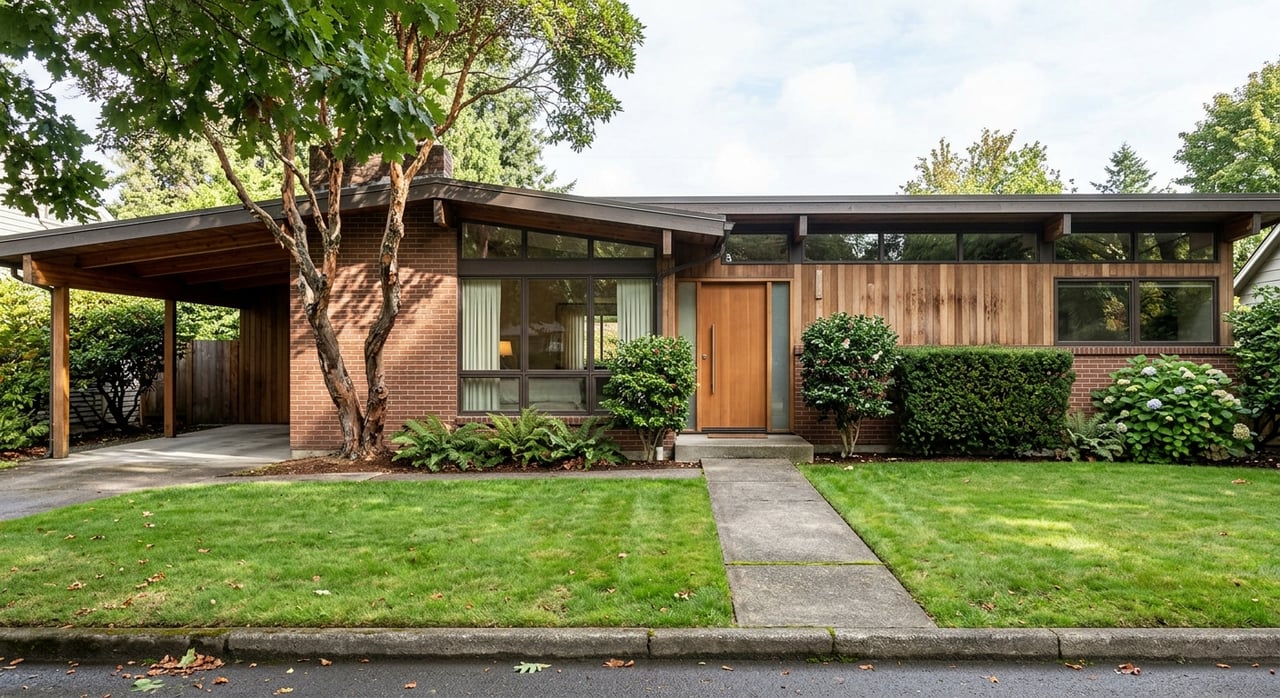
Oak Bay is not only a character-home market. It also has a quieter mid-century layer, including notable modern homes such as the Mayhew home on Beach Drive, begun in 1950 and identified by Oak Bay Archives as the first Modern Post and Beam house built in the district.
These homes may not always dominate the public image of Oak Bay, but they have their own appeal. Buyers often respond to their clean proportions, natural light, and relationship to the site.
What tends to matter in mid-century homes
With mid-century properties, preservation of core design features often matters more than decoration. Homes that retain their original scale, simple massing, and connection to the lot may feel more coherent than ones that have been heavily altered without regard to the original design.
That is consistent with Oak Bay’s planning language. The district generally supports work that respects existing form, scale, massing, materials, and character rather than changes that ignore the surrounding streetscape.
Newer builds can succeed too
A common question in Oak Bay is whether newer homes need to look old to fit in. The short answer is no.
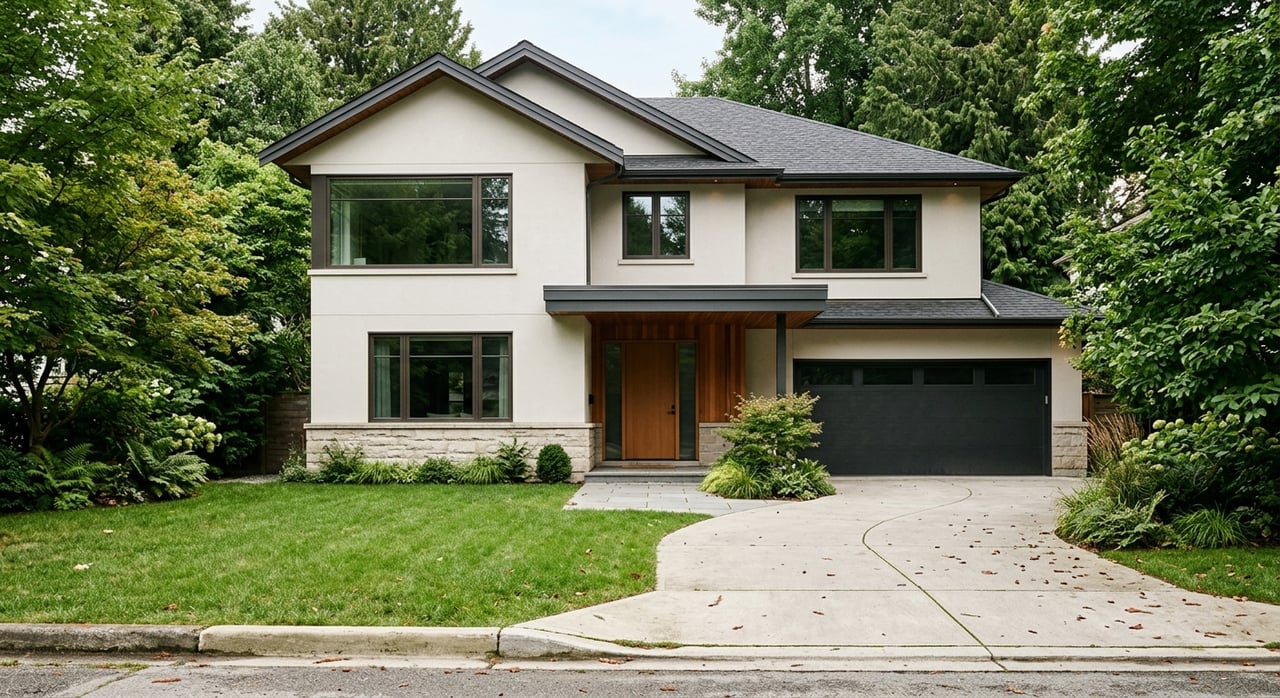
Oak Bay’s policies support contemporary design when it responds sensitively to existing form and character. In the Prospect Heritage Conservation Area guidelines, the district encourages either a contemporary idiom linked to historic methods, forms, and detailing or a traditional architectural style, while recommending materials such as wood, stucco, stone, and cedar shingles.
Fit matters as much as finish
For newer custom homes and infill projects, visual compatibility matters. A polished new build may still feel out of place if its scale, materials, or massing conflict with the block.
On the other hand, a contemporary house can sit very comfortably in Oak Bay when it feels deliberate on its site and respects the surrounding streetscape. That does not guarantee a market premium, but it reflects the district’s clearest design guidance.
How architecture influences value
Architecture matters in Oak Bay because it interacts with several other factors buyers care about. The most important ones are usually site fit, condition, renovation quality, and neighborhood context.
In practical terms, that means a beautifully styled home may still underperform if the layout feels compromised, the updates are inconsistent, or the lot does not support the home well. Likewise, a simpler house can draw strong interest when the siting, proportions, and condition feel right.
Siting can be a major advantage
Oak Bay’s heritage record often describes more than the house itself. It frequently highlights homes set back from the street, on corners, on slopes, beside mature gardens, or arranged around stone walls and gates.
Those are not just attractive details. They are often part of what makes a property memorable and can influence buyer response as much as square footage does.
Renovation quality often shapes perception
Updates matter, but so does how they are done. Oak Bay’s heritage policies support retention and rehabilitation of heritage and character buildings, and local design guidance favors complementary design and traditional materials over mismatched historical combinations or imitative materials.
For buyers, that often translates into a simple test: does the work improve livability while respecting the home’s proportions, trim, windows, and relationship to the lot? When the answer is yes, the result often feels more convincing.
What sellers should keep in mind
If you are preparing to sell an Oak Bay home, architectural style should be positioned carefully. The goal is not just to name the style, but to show how the home’s design, setting, and updates support long-term appeal.
A strong presentation often focuses on features such as original detailing, thoughtful renovations, mature landscaping, setback from the street, and how the home fits within the block. In Oak Bay, buyers are often responding to the whole composition, not just the façade.
Seller priorities to review
- Identify any original architectural features worth highlighting.
- Look at whether past updates feel consistent with the home’s character.
- Pay attention to landscaping, stonework, garden setting, and street presence.
- Consider how the lot, views, and siting contribute to the story.
What buyers should watch for
If you are buying in Oak Bay, it helps to look beyond first impressions. A home’s style can create emotional pull, but long-term value is more likely to be supported when architecture, condition, and site all work together.
That applies whether you are considering a Tudor Revival home, a mid-century property, or a newer custom build. The strongest opportunities are often homes where design integrity and practical livability meet.
Buyer questions worth asking
- How much original character has been preserved?
- Do renovations feel consistent with the home’s design?
- Does the house fit the scale and rhythm of the street?
- How do the lot, setbacks, landscaping, and views affect appeal?
- Are there local heritage considerations that may affect future changes?
Oak Bay style is really about context
The most useful way to think about Oak Bay architecture is as a spectrum. On one end, you have preserved character homes with strong period detail. In the middle, you have understated mid-century properties that reward good design discipline. On the other end, you have newer custom homes and infill that can work very well when they respond to their setting.
Across that spectrum, the same principle keeps coming up: value is usually shaped less by the style name and more by architectural integrity, lot fit, and the quality of change over time. In a place like Oak Bay, context matters.
If you are weighing a purchase, planning a sale, or trying to understand how your home’s design may influence market response, working with a team that understands Oak Bay at the micro-market level can make the process much clearer. Connect with FarupScott Group for thoughtful guidance grounded in Oak Bay’s distinct housing landscape.
FAQs
What architectural styles are most associated with Oak Bay homes?
- Oak Bay’s heritage record most often points to Arts and Crafts or Craftsman and Tudor Revival homes, with Georgian, Queen Anne, Italianate, Classical Revival, and mid-century modern examples also present.
Does heritage designation automatically increase Oak Bay home value?
- No automatic value premium is stated in the local sources. Heritage status can support buyer interest in authenticity, but it may also involve added review processes or constraints for significant changes.
Do new homes in Oak Bay need to copy older houses?
- No. Oak Bay supports contemporary design when it is compatible with surrounding form, scale, massing, materials, and character.
What matters most to Oak Bay buyers and sellers when evaluating value?
- The recurring factors are architectural integrity, lot fit, condition, renovation quality, and neighborhood context, along with standard valuation factors such as size, layout, views, and comparable sales.
Why do lot setting and landscaping matter in Oak Bay real estate?
- Oak Bay’s heritage record often treats mature gardens, setbacks, stone walls, corners, slopes, and other site features as character-defining elements that shape buyer interest and overall property appeal.